





MEMSIC’s Geomagnetic Sensors and 6-Axis IMUs Work in Tandem to Boost the Development of Low-Altitude Economy
Release Time:2026.05.12
As the low-altitude economy flourishes, drones are widely deployed across numerous scenarios including logistics delivery, agricultural plant protection, power grid inspection, emergency rescue and low-altitude aerial photography, serving as a key driver for industrial upgrading.
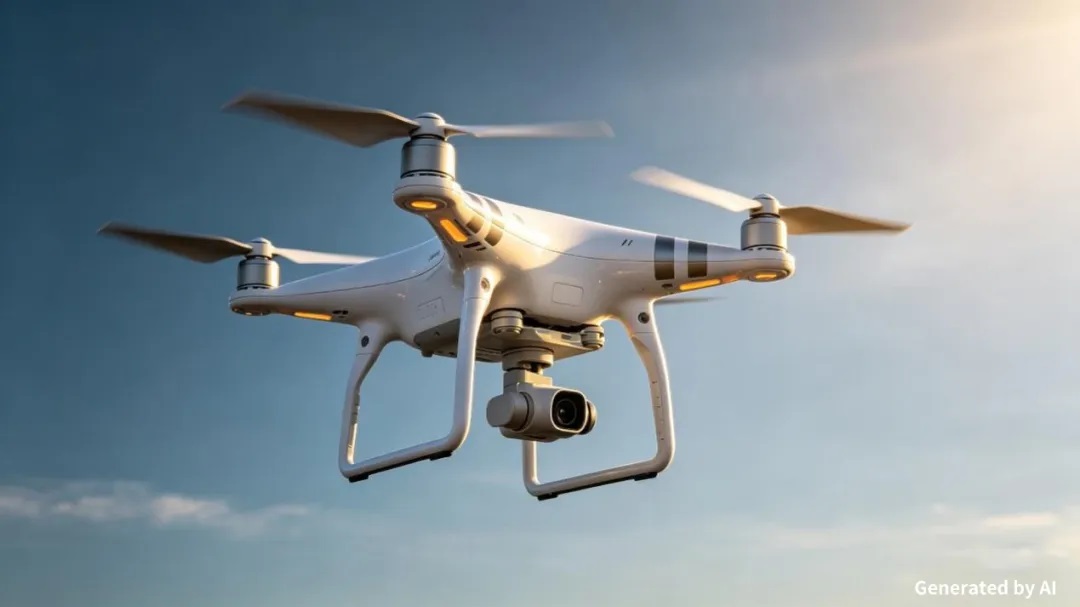
Within a drone’s flight system, the inertial navigation module (INS/IMU) acts as the drone’s “autonomous navigation brain” and “attitude control hub”, directly determining flight stability and navigation performance in complex environments.
When drones perform high-speed maneuvers, sharp turns and other flight movements, the inertial navigation system must perceive real-time changes in aircraft attitude to keep the flight controller operating steadily and prevent loss-of-control risks. When GNSS (Global Navigation Satellite System) signals are jammed or even unavailable, the system relies on IMUs (Inertial Measurement Units) and geomagnetic sensors to measure angular velocity, acceleration and geomagnetic field direction in real time, and conduct fusion calculation to continuously estimate the drone’s position, velocity and attitude. This navigation technology independent of external signals and purely based on onboard sensors is inertial navigation, one of the core technologies enabling autonomous flight for high-end drones.
As a national-level Specialized, Sophisticated, Unique and Innovative “Little Giant” enterprise for MEMS sensor chips, MEMSIC began close monitoring and layout in the drone sector at the early stage of the industry boom. Drawing on long-term expertise in the AMR (Anisotropic Magnetoresistance) technology route, the company has capitalized on its strengths to build industry-leading geomagnetic sensor design and process capabilities, supported by a mature, solid market foundation and supply chain system. On this basis, MEMSIC actively collaborates with leading drone OEMs, integrating high-precision 3-axis geomagnetic sensors into drone inertial navigation modules.
Geomagnetic sensors accurately capture variations of Earth’s magnetic field along X/Y/Z three axes, delivering critical yaw angle reference for drones and helping aircraft maintain stable and precise directional control under complex conditions.
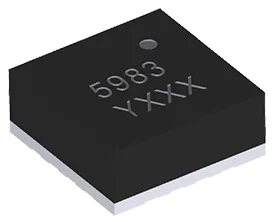
MEMSIC’s high-precision 3-axis geomagnetic sensor MMC5983MA stands out with exceptional performance: high sensitivity of 16384 counts/G, high output data rate (ODR) of 1000 Hz, wide operating temperature range of -40℃ to 105℃, low zero-bias thermal drift of 3 mG, low RMS noise of 0.4 mG and low hysteresis of 0.01%FS. It also features robust ESD protection and strong immunity to electromagnetic interference, fully meeting stringent requirements for geomagnetic sensors deployed in harsh drone operating environments.
In addition, MMC5983MA boasts high yield, superior reliability and consistent supply. It has gained wide recognition and achieved considerable market penetration in the high-end drone market.
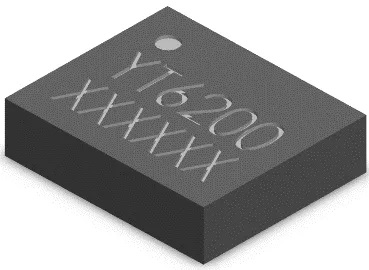
Besides geomagnetic sensors, IMU chips represent another core component within drone inertial navigation systems. By measuring 3-axis angular velocity and linear acceleration of the airframe, IMUs directly reflect aircraft motion and attitude variations, forming the foundation for precise flight control.
In recent years, MEMSIC has steadily increased R&D investment in 6-axis IMUs. Through long-term parallel iteration and architecture optimization, the company has built product competitiveness balancing high performance, low cost and high reliability.
From an industrial chain perspective, MEMSIC leverages mature process platforms from world-renowned foundries for consumer-grade and automotive-grade MEMS & ASIC wafers. Combined with its mass-production expertise in inertial sensors validated by many customers, MEMSIC guarantees stable production capacity, yield and quality. Drawing on years of large-volume shipment experience, MEMSIC has shipped more than 4 billion sensor chips, backed by mature delivery and quality control systems.
At the core technology level, MEMSIC adheres to independent R&D. The ASIC architecture and core IP of its 6-axis IMUs are fully domestically controllable, with key modules such as ADC, AMP and DSP (Digital Signal Processing) all self-developed. Meanwhile, its products are pin-compatible with mainstream international solutions, effectively lowering customers’ design-in and replacement costs and accelerating localized adoption.
Building on decades of accumulated expertise in geomagnetic sensors and fusion algorithms, MEMSIC can also provide customers with 9-axis electronic compass and inertial navigation solution support, enabling more stable and accurate drone flight control under weak or even GNSS-denied environments.
On algorithm capabilities, MEMSIC has persisted in R&D over more than a decade. The company has built competitive advantages in gyro-assisted geomagnetic calibration and anti-interference heading fusion algorithms, verified and approved by many domestic and global manufacturers of smartphones, sports watches and diving watches and other smart wearables.
Based on the above, MEMSIC’s professional drone partners (including distributors) can deliver full-set drone attitude control and navigation solutions, helping customers efficiently complete the overall design and integration of drone inertial navigation units and accelerate product development and launch.
Furthermore, MEMSIC’s high-precision, high-bandwidth magnetic encoder chips based on AMR technology, as well as eOIS electronic optical image stabilization drivers and controllers, are continuously advancing customer design-in for drone gimbals and cameras.
As the low-altitude economy enters large-scale development, the drone industry will see sustained rising demand for high-performance, highly reliable domestic core components. Through coordinated deployment across geomagnetic sensors, IMU chips and magnetic encoders, MEMSIC continues to enhance core perception capabilities for drones and contribute Chinese silicon power to the low-altitude economy.