





MEMSIC Precision Sensing Solutions: Full-Stack Empowerment for the “Nerve Endings” of Embodied Intelligence
Release Time:2026.05.20

As humanoid robots step into factories, households and commercial settings, the core of industrial competition is extending beyond computing power toward sensing capability.
Currently, robots still struggle to move as naturally as humans. Dexterous gripping, dynamic balancing and spatial interaction remain major industry bottlenecks, largely because robots lack a sufficiently mature “nervous system”. For embodied intelligence, large language models serve as the “brain”, while sensors determine whether robots can truly comprehend the physical world. Robots need real-time perception of their motion status, environmental changes and interactive feedback to achieve stable locomotion, precise gripping and sophisticated motion control.
The humanoid robot industry stands on the eve of commercialization, and the value of sensors is being redefined. Goldman Sachs forecasts that the global humanoid robot market may reach an annual volume of 1.5 million units by 2032, with each robot requiring dozens or even hundreds of sensors. From joint motion control and inertial navigation to haptic feedback and image stabilization, the sensing system has become a critical foundation enabling large-scale robot deployment.
Jiang Leyue, Chief Technology Officer of MEMSIC, notes that in response to core demands of embodied intelligence, MEMSIC is continuously building full-stack sensing solutions spanning motion control, inertial navigation, haptic perception and image stabilization, delivering more accurate and reliable “nerve endings” for robots.
Joint Motion Control: AMR Magnetic Encoders + Hall Position Sensors
Joint systems are regarded as the “motion core” of humanoid robots. Every lift, turn and walk of a robot relies on real-time feedback of massive position and motion data. Especially as humanoid robots gain more degrees of freedom, joint control precision directly dictates overall robotic mobility.
Addressing control requirements for robot joints, motors and rotating shafts, MEMSIC offers AMR magnetic encoder and Hall position sensor solutions. High-precision position detection delivers more stable motion feedback for robots.
Jiang Leyue, CTO of MEMSIC, emphasizes that MEMSIC’s MDA2000BT AMR magnetic encoder features a 21-bit SPI interface with an Integral Non-Linearity (INL) as low as ±0.06°, satisfying demand for precision position control in high-degree-of-freedom humanoid robot joints. Its high precision and high bandwidth effectively boost stability and response accuracy of robotic motion control under dynamic operating conditions. Built upon accumulated AMR magnetic sensing expertise, MEMSIC products are well suited for high-dynamic control scenarios in complex motion environments, demonstrating distinct advantages in precision, response speed, anti-interference performance, stability and reliability. Meanwhile, mature local supply chain capacity meets the robotic industry’s requirement for consistent long-term delivery.
High-Precision Inertial Navigation: Low-Drift 6-Axis IMU Enables Stable Locomotion
If joint systems decide whether a robot “can move”, inertial navigation systems determine whether it “can move steadily”.
Whether for dynamic walking of humanoid robots or high-speed flight of drones, the essence lies in real-time attitude sensing and continuous motion correction.
MEMSIC’s 6-axis IMU MIC6200AL delivers gyro bias as low as ±3 dps, thermal drift controlled at ±0.05 dps/°C, and sensitivity error of ±1%. It effectively improves attitude stability and navigation accuracy during robot dynamic movements and enables smoother motion control.
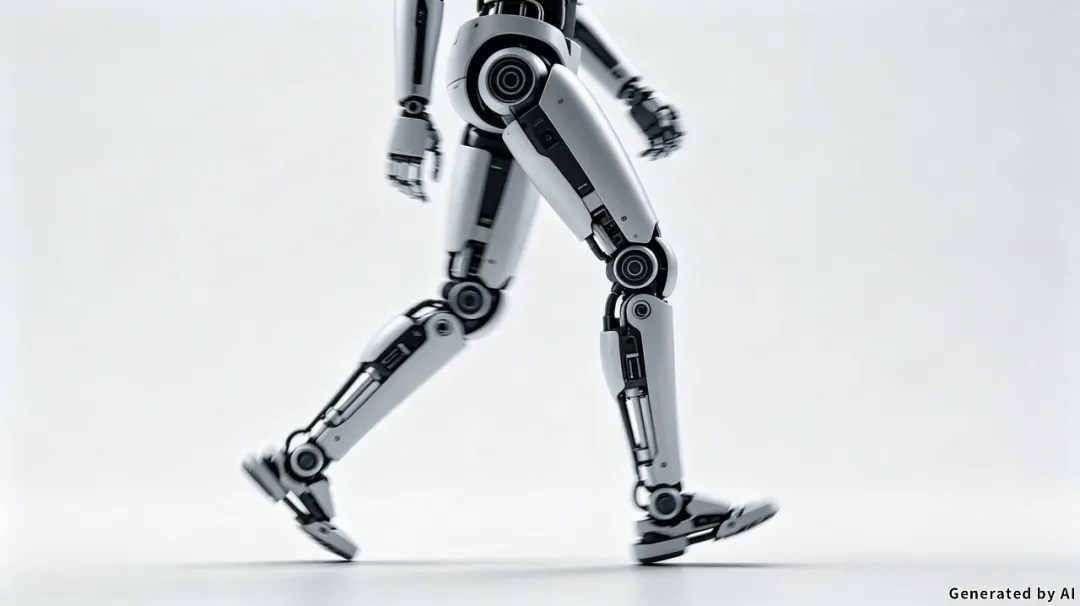
As embodied intelligence transitions from laboratories to real-world environments, industry requirements for IMU stability and reliability keep rising. MEMSIC’s long-standing expertise in MEMS inertial sensing continuously strengthens its application footprint in emerging markets including robotics and drones.
Dexterous Hand Haptic Perception: 3D Geomagnetic Sensors for “Electronic Skin”
For humanoid robots, dexterous hands represent one of the most technically challenging segments.
Robots must not merely grasp objects, but also perceive force variations, contact states and spatial positional relationships. This requires near-human haptic sensing capability. High-sensitivity, miniaturized, low-power magnetic sensing solutions have become a key development path for the “electronic skin” of humanoid robots.

To address this demand, MEMSIC introduces an AMR-based 3D geomagnetic sensor matrix solution. Fine-grained spatial magnetic field sensing supports robotic haptic feedback systems. Among the portfolio, MMC5983MA has obtained AEC-Q100 Grade 2 automotive qualification with strong reliability and anti-interference performance. MMC5603 adopts an ultra-small package, ideal for highly integrated spaces such as robot dexterous hands.
With refined spatial magnetic field detection, MEMSIC provides enhanced precise sensing support for robotic haptic feedback systems.
Evolution of Intelligent Vision: Image Stabilization Driver Chips Reshape Robots’ Spatial Comprehension
Vision systems act as a primary gateway for robots to perceive the external world.
Nevertheless, jitter and displacement during dynamic movement directly impair robot target recognition, environmental awareness and path planning.
To tackle this challenge, MEMSIC’s image stabilization driver chips MSD2100WA and MSD4200WA integrate eOIS and EIS algorithms, maintaining stable visual output while robots are in motion and supplying dependable data for vision systems. MSD2100WA supports a 1 MHz I²C communication clock and embeds intelligent VCM control algorithms. MSD4200WA integrates linear Hall sensors and PID control algorithms to achieve higher-precision image stabilization.

As embodied intelligence enters complex real-world scenarios, robots demand continuously improved stability and real-time performance from vision systems. Image stabilization technology is evolving beyond traditional consumer electronics to become a vital enabler for robot environmental perception, dynamic decision-making and autonomous interaction, advancing robotic vision systems toward higher precision and stronger cross-module coordination.
In the transition of embodied intelligence from mechanical execution to authentic perception, sensors are being redefined and evolving into the critical foundation bridging the physical world and intelligent decision-making. As robotic capabilities expand, industry competition has shifted from pure algorithm and computing power rivalry to comprehensive evaluation of sensing systems in precision, stability and coordination.
Drawing on core technologies including MEMS, AMR magnetic sensing and inertial navigation, MEMSIC continues to build full-stack sensing capabilities covering chips, algorithms and system coordination. The company deepens industrial collaboration targeting emerging sectors such as robotics, drones and smart terminals, accelerating integration between sensing technologies and embodied intelligence use cases. Looking ahead, MEMSIC will continue to leverage precision sensing as a core pillar to facilitate embodied intelligence moving from technical validation toward large-scale commercial rollout.