




China’s Semiconductor Industry Undergoes Value Reassessment; MEMSIC Secures New Round of RMB 200 Million Financing
Release Time:2026.04.08
MEMSIC is striving to build a strategic asset boasting rare qualifications in niche sectors, potential for system-level solution delivery, and a favorable position within the self-reliant and controllable industrial chain.
Recently, MEMSIC has secured a RMB 200 million investment led by state-owned capital from Wuhu, Anhui Province. The company plans to deploy its years of accumulated innovative industrial projects in Wuhu. “Wuhu’s prior industrial ecosystem layout has built an excellent ecosystem scenario for us to complete our product chain,” stated Haiyan Huang, Chairperson of MEMSIC. MEMSIC’s sensors can be rapidly deployed in a wide range of emerging industrial scenarios, forming a virtuous cycle: scenarios drive application, innovation happens within application, and application performance improves through innovation. Meanwhile, “Wuhu, Anhui, has introduced MEMSIC to foster the development of its industrial ecosystem.”
One and a half months earlier, the 2026 Spring Festival Gala set a new record for AI adoption. Beyond large-model products from major tech firms including ByteDance, Alibaba and Tencent, robotics companies such as Agibot, Unitree, Galaxy General, Songyan Dynamics and Magic Atom each invested approximately RMB 100 million in a quiet technological and positioning showcase competition. Behind this spectacle, competition within segmented tracks of the robotics industrial chain has intensified.
MEMSIC (Tianjin) Co., Ltd. (MEMSIC), the supplier of “sensory organs” for robots, kept its production team working through the Spring Festival holiday. More than 30 staff members participated in testing, operating two 12-hour shifts round the clock with non-stop production lines. The company delivered its first batch of new products — six-axis sensors — to customers on schedule.
Compared with common three-axis sensors available on the market, six-axis sensors deliver higher positioning accuracy and more stable operation; smartphone photography and robot locomotion heavily rely on such components. In the past, six-axis sensors were fully import-dependent. MEMSIC has invested hundreds of millions of R&D funds over nearly six years to develop domestically produced chips that break overseas monopolies. Mass production kicked off this January, and the firm has already received bulk orders from domestic mobile phone manufacturers, drone makers and overseas wearable-device brands, with production schedules booked through the end of May.
Against this backdrop, MEMSIC, holding an important position within the global MEMS sensor segment, has gradually stepped into the spotlight. As one of China’s earliest enterprises to achieve full-chain technological self-reliance for MEMS inertial sensors, MEMSIC holds leading global market share for AMR magnetometers in the Android smartphone market and for accelerometers. It supplies high-reliability solutions to leading smartphone brands and ODM manufacturers, substantially strengthening the resilience and security of China’s consumer electronics industrial chain.
Now, drawing on over 20 years of intensive R&D in inertial and magnetic sensors, MEMSIC is poised to replicate its consumer-electronics success in robotic sensing systems and embark on a new growth curve. In this process, MEMSIC will complete its transformation: evolving from a mature, cyclical standard component supplier into a strategic asset with rare niche-industry qualifications, system-level solution capabilities, and an advantageous foothold within the self-reliant industrial chain.
As widely recognized, geopolitical tensions in recent years have severely disrupted globalized supply chains, prompting nations and regions to accelerate the reconstruction of local supply ecosystems. As the “industrial grain” underpinning the digital economy, artificial intelligence, new energy vehicles and other strategic industries, semiconductor technological iteration and supply chain security have become critical factors for China to secure strategic initiative in AI.
Driven by rapid market expansion, the global semiconductor industry is at a pivotal juncture marked by technological paradigm shifts, supply chain restructuring and deepening geopolitical impacts. For China’s semiconductor sector, this represents both an unprecedented period of challenges and a strategic window to pursue self-reliance and achieve structural breakthroughs.
As Moore’s Law gradually approaches physical limits, the traditional path of boosting performance solely through transistor miniaturization has hit bottlenecks. As process nodes shrink below 5 nm, performance gains from pure process advancement have slowed sharply while costs rise exponentially.
The solution for the post-Moore era lies in a paradigm shift from system-on-chip (SoC) to system-in-package (SiP). The core of this transition is to abandon the pursuit of integrating all functions onto a single chip, and instead split large chips into multiple functional modules, namely chiplets. It can be anticipated that post-Moore innovation paradigms including Chiplet, advanced packaging and heterogeneous integration offer Chinese enterprises a pathway to bypass certain cutting-edge process restrictions and achieve performance breakthroughs via system-level and architectural innovation.
Additionally, competitive landscapes remain unsettled in emerging areas such as AIoT, edge AI, the RISC-V open instruction-set architecture ecosystem and automotive chips, creating opportunities for Chinese enterprises to participate in — and even lead — standard-setting and ecosystem building. Take automotive chips as an example: traditional fuel vehicles require only dozens of chips, while modern intelligent electric vehicles need thousands, with explosive demand spanning autonomous driving to window control. Moreover, automotive-grade chips demand high reliability and long supply cycles, precisely the strengths of Chinese companies that excel at service provision and long-term commitment.
Industry insiders note that China previously competed in the chip industry on a playing field built by others and governed by rules set by others. In emerging tracks such as AIoT and automotive chips, Chinese enterprises get the chance to draw the lines, build the arena and even serve as referees. This constitutes the strategic opportunity for Chinese semiconductor firms represented by MEMSIC.
Data from the Semiconductor Industry Association (SIA) shows global industry sales reached USD 791.7 billion in 2025, with a projected 26% growth in 2026. John Neuffer, CEO of SIA, stated that the global market will hit the USD 1 trillion milestone far sooner than initially anticipated, a positive signal for the broader business community.
Within this sector, micro-electro-mechanical systems (MEMS) sensors — tiny yet critical components bridging the physical and digital worlds — stand out as representatives of technological breakthrough and value re-evaluation across semiconductor sub-segments.
AI-Driven: Deep Integration of Sensing and Intelligence Enters a New Cycle
The Top 10 Sensor Industry Trends for 2026, released by the China Electronic Components Association, clearly states that the industry is undergoing profound transformation from “quantitative expansion” to “structural reconstruction.” The core driver behind this shift is the deep fusion of sensing technology and artificial intelligence. Sensors function as the “five senses” for data collection and are evolving into intelligent nodes equipped with “brains”.
With the explosive advancement of AI, the sensor industry has entered a new strategic window. Accurate AI decision-making relies on massive volumes of high-quality data, and sensors, as core data acquisition terminals, are growing ever more vital. In this long-dominated arena led by international giants such as Bosch and STMicroelectronics, MEMSIC is carving out market space. Following its NASDAQ listing, privatization and four years of turbulence without a controlling shareholder, the company welcomed new leadership in 2025.
Haiyan Huang, current Chairperson of MEMSIC, left her public-sector role to launch entrepreneurial ventures more than a decade ago. In 2013, she founded Zhejiang Jionda Energy Technology Co., Ltd., which was successfully merged into listed firm Chaofeng San in 2017 to enter the capital market. In the same year, she co-founded Hangzhou Fenghua Private Equity Fund Management Co., Ltd., which now manages assets exceeding RMB 10 billion.
In 2019, Haiyan Huang made a bold move: Fenghua Capital, together with multiple renowned investment institutions and industrial partners, completed the full acquisition of MEMSIC for RMB 2.56 billion. At that time, she served solely as an investor. After formally taking office as MEMSIC Chairperson, her extensive grassroots administrative experience shaped her distinctive working style: sharp perception of policy trends, deep insight into market logic, and strong capability for resource integration.
“In the AI era for manufacturing, sensors are ubiquitous. The sector has entered a growth window, because everything requires sensing. Sensors collect data, issue commands and convert data into intelligence,” Haiyan Huang commented. In her view, AI not only unlocks broad application scenarios for sensors but also reshapes sensor technical architectures and business models. Sensors are evolving from standalone physical perception units into the “nerve endings” of intelligent systems, and the industry logic is shifting from mere chip sales toward deep integration with application scenarios.
Haiyan Huang insists on deep coupling of technology and application: apply through innovation and improve through application. In market layout, she advances deep cooperation with leading domestic industry players while fully exploring new tracks including new energy vehicles and low-altitude economy. MEMSIC has established links with top domestic EV makers to realize zero-distance alignment between sensor R&D and end-user requirements. This model transformation means sensor value is no longer determined purely by hardware, but by how well sensors embed into AI ecosystems and resolve real pain points. Sensor vendors are transforming from component suppliers into enablers of intelligent solutions.
“We have identified several clear application directions,” explained Jian Lu, CEO of MEMSIC. At the technical level, the fusion of AI and sensors manifests across three dimensions. “Sensors used to operate as individual discrete devices; today multi-sensor fusion is prevalent. We develop algorithms in-house, putting us in a strong position to seize this market opportunity.” Multi-sensor fusion will advance toward deeper system-level collaboration. Future winners will be companies focused on delivering a “perception capability set” rather than discrete components.
Jian Lu added that innovative deployment of sensor matrices unlocks enormous potential. “Previously, only one sensor was typically deployed within a single sub-module. Many innovative applications now implement a sensor matrix within one sub-module.” This matrix architecture exponentially expands the scope for algorithm deployment, enabling previously immature use cases including ultra-precise micro-expression recognition, predictive maintenance for industrial settings, and non-invasive medical-grade health monitoring.
The rollout of edge AI decision-making empowers sensors to comprehend “what is happening”, rather than merely “what data is detected”. “We have begun allocating manpower to innovate on edge AI decision-making,” Jian Lu stated. Integrating AI computing power on the sensor side enables real-time identification and judgment of events. “It does not merely detect isolated events; it interprets a sequence of events and informs the main controller of the full context.” The interactive logic of the whole industry will be transformed accordingly.
Breakthroughs and Challenges in Domestic Substitution
Current semiconductor competition between China and the United States constitutes an all-round contest covering supply chains, technical standards and industrial ecosystems. Chenghao Sun, Associate Research Fellow at the Center for Strategic and Security Studies, Tsinghua University, argues that the U.S. has built a composite regulatory system spanning innovation, supply and data chains by expanding the Entity List, imposing bans on semiconductor equipment and restricting advanced process technologies, attempting to lock China into a generational technology gap.
Against this backdrop, constrained by limited access to advanced process nodes, Chinese enterprises are leveraging architectural optimization and hardware-software co-design to boost performance using mature manufacturing processes, completing the shift from “backup suppliers” to “primary players”. A CSIS report notes that the crux of U.S.-China tech rivalry is no longer isolated technological breakthroughs, but long-term competition across entire ecosystems.
Take MEMSIC as an example. Founded in 1999, the company has built a closed-loop technology ecosystem covering chip design, wafer fabrication, packaging & testing and algorithm development, holding more than 260 independently developed domestic and overseas patents. Specifically, MEMSIC masters key front-end wafer fabrication processes, and conducts testing and calibration for 80% of its production capacity in-house. Calibration is especially critical for sensors, as it directly impacts accuracy and long-term precision stability. Leyue Jiang, Vice President of R&D at MEMSIC, said: “MEMSIC’s automotive-grade thermal accelerometers meet the 0 ppm reliability requirements for automotive customers.”
On the technical route, MEMSIC adopts an integration pathway compatible with CMOS processes. It is among the world’s first to integrate MEMS and mixed-signal processing circuits onto a single chip. This delivers superior quality and smaller form factor while cutting per-chip cost by 60%. This mindset of “leveraging design to optimize processes and architecture to enhance performance” aligns closely with the breakthrough path adopted by domestic chips in AI.
Haiyan Huang said while supplying sensor products, MEMSIC also delivers holistic design schemes and architectural thinking. This “product + solution” model creates deep bonds with customers. “We jointly mitigate market risks and break through unquantifiable ceilings. That is what we pursue.”
According to Mordor Intelligence, a globally renowned technology research and consulting firm, the global sensor market will grow from USD 244.31 billion in 2025 to USD 269.43 billion in 2026, and is projected to reach USD 439.66 billion by 2031, representing a compound annual growth rate (CAGR) of 10.29% from 2026 to 2031. Fortune Business Insights offers a more optimistic forecast: the global sensor market will hit USD 527.94 billion by 2034, with a CAGR of 9.30% for 2026–2034.
For the Chinese market, data from China Industry Research Institute forecasts the market will exceed RMB 500 billion and reach RMB 504.24 billion in 2026. The smart sensor segment will see faster growth: valued at RMB 162.85 billion in 2024, it is expected to hit RMB 211.32 billion in 2026.
Industry projections indicate that each person will eventually own three robots on average. Based on China’s population of 1 billion, this translates to market demand for 3 billion robots. Each robot requires 100 encoders, meaning the encoder market alone will reach 300 billion units. “In the long run, this represents a multi-trillion RMB market space,” Jian Lu commented.
Jian Lu explained that functions of humanoid robots including joint control, posture adjustment and environmental interaction all rely on high-precision sensors. MEMSIC’s encoders and six-axis IMUs supply precise position, velocity and posture data for robots. Combined with AI algorithms, they enable flexible robotic movement and intelligent interaction.
In the automotive sector, advances in autonomous driving raise higher requirements for sensor precision, reliability and real-time responsiveness. MEMSIC’s automotive-grade sensors not only satisfy traditional demands such as airbag triggering and vehicle stability control, but also deliver core data for environmental perception, path planning, real-time body posture and surrounding conditions to support autonomous driving.
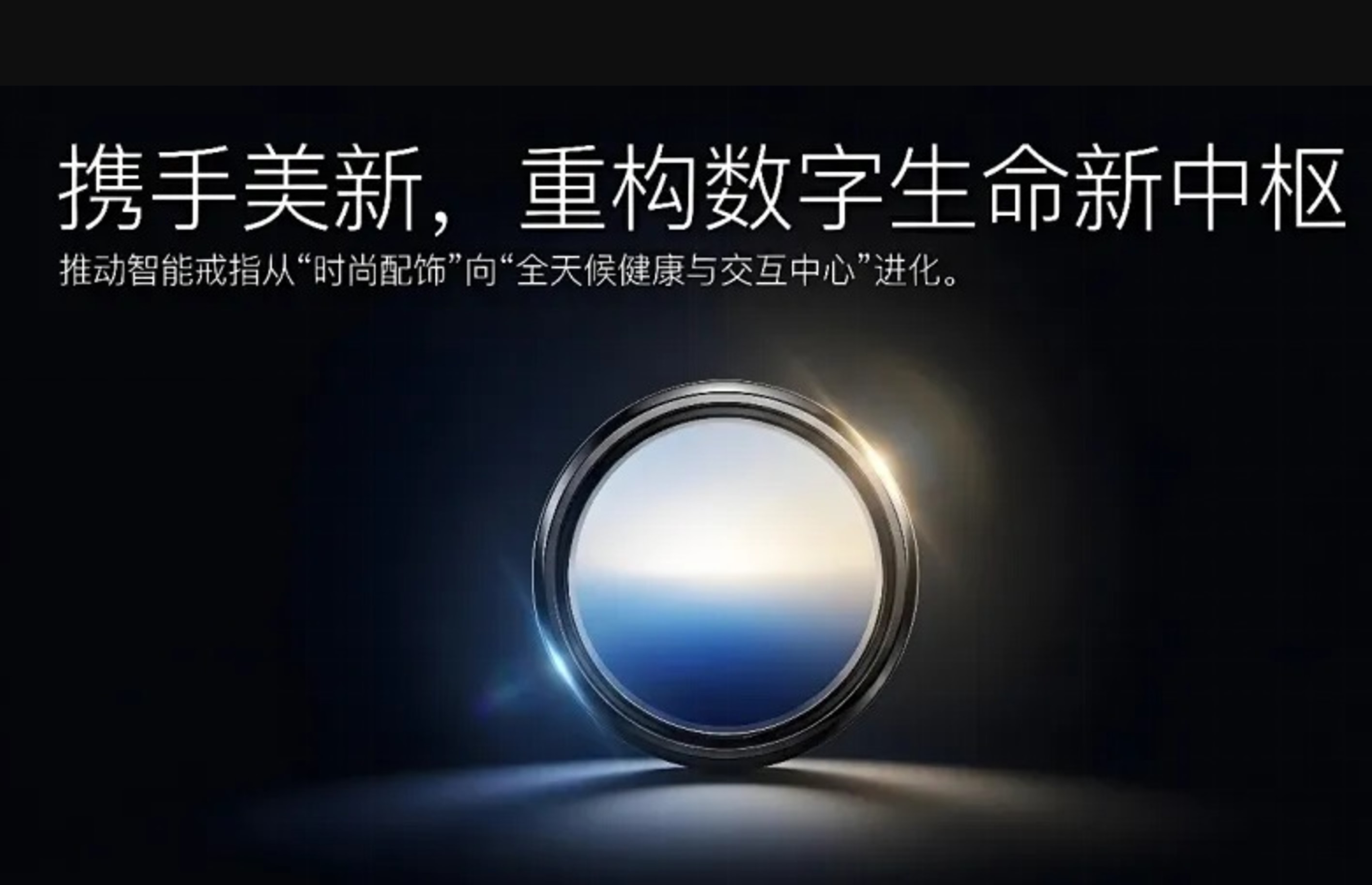
In consumer electronics, as feature phones transitioned to smartphones, MEMSIC magnetometers provided core support for device attitude sensing and anti-shutter photography. With exceptional stability and reliability, MEMSIC ranks among the top three suppliers for leading domestic mobile brands. Global e-commerce, search and social media giants have also initiated cooperation discussions, and MEMSIC exclusively supplies core magnetic sensing components for international wearable brands such as smart rings.
Within magnetic sensors, MEMSIC ranks among the world’s largest suppliers of AMR (Anisotropic Magnetoresistance) sensors. Its magnetometers deliver outstanding precision, measuring the ubiquitous Earth’s magnetic field, and are applicable across land, sea and air scenarios.
In the low-altitude economy, MEMSIC sensors deliver core perception capabilities for drones and electric vertical take-off and landing (eVTOL) aircraft. High-precision accelerometers, gyroscopes and magnetometers are indispensable for precise hovering and path navigation of drones, as well as flight attitude control and obstacle avoidance alerts for eVTOL vehicles.
One challenge to acknowledge is the long-standing, generally low profit margins of Chinese semiconductor enterprises. Chinese firms seek market share by offering high performance at competitive prices, yet low profitability in turn weakens long-term corporate competitiveness. This is a critical issue that MEMSIC and other industry players must address.
From MEMSIC’s perspective, genuine domestic substitution is not about being low-cost backup alternatives, but becoming indispensable primary suppliers. MEMSIC avoids price competition with peers and chooses a different path: “compete upward” through technology and “compete outward” by expanding global markets.
Technological Breakthrough: The IDM Model — Light Assets with High Barriers
Unlike many Fabless chip design companies, MEMSIC is one of the few global enterprises operating a full-chain IDM (Integrated Device Manufacturer) model for inertial MEMS sensors. It has built a closed-loop technology system covering chip design, wafer fabrication, packaging & testing and algorithm development, creating hard-to-replicate systematic competitive advantages in magnetic and inertial sensors.
“For sensor enterprises, a pure Fabless model is unlikely to sustain long-term success,” explained Haidong Liu. “We must master core processes and key technologies in-house. The company maintains continuous R&D investment and has built one-stop solution capabilities spanning MEMS sensing chips, intelligent algorithms and scenario-specific solutions. We establish barriers via patents, process platforms and proprietary know-how.” Haidong Liu added, “This is one of the reasons MEMSIC has endured for so long.”
In the deep phase of semiconductor domestic substitution, capital expenditure for building a new automotive-grade MEMS production line from scratch is extremely high. An 8-inch dedicated MEMS line requires RMB 3–5 billion investment, with a yield ramp-up cycle lasting 3 to 5 years. This creates substantial entry barriers for MEMSIC.
In the late 1990s, “MEMSIC was the world’s first developer of thermal accelerometers. There were no existing references for us to copy. We built the technology from the ground up and entered automotive and consumer markets, with many original innovations,” recalled Leyue Jiang when reviewing MEMSIC’s founding journey.
At that time, traditional mechanical accelerometers featured large size and high power consumption, failing to meet consumer and automotive electronics trends toward miniaturization and low power draw. MEMSIC’s team pioneered thermal accelerometers based on thermal convection principles, reshaping the industry landscape. This technological leap established MEMSIC as the global benchmark for thermal accelerometers.
“Currently we are one of China’s few automotive-grade accelerometer suppliers, competing against top international brands,” Jian Lu introduced. Faced with customers’ brand bias and habitual reliance on overseas vendors, MEMSIC proves its value through performance. “For automotive applications, from the critical safety perspective, our shock resistance is 10 times that of overseas competitors.”
Nevertheless, market expansion has not been without obstacles. For products requiring ultra-high reliability, once core component suppliers are selected, replacement is extremely difficult. MEMSIC adopted an indirect market entry strategy: first entering the South Korean market, delivering products to renowned Korean automotive brands through local tier-one integrators, and ultimately earning wide recognition from domestic customers.
Leyue Jiang stated: “From a technical perspective, MEMSIC’s accumulated expertise and iterative innovation enable us to catch up with international giants via short-cycle design upgrades. First achieve domestic substitution, then surpass global players.”
Building Innovation Ecosystem: Government-Enterprise Collaboration and Industrial Resonance
Semiconductor industrial development relies on multi-dimensional collaboration among technology, capital, policy and markets. Today MEMSIC operates self-built manufacturing and packaging lines in Tianjin, Shaoxing, Wuxi and Wuhu, with R&D centers in China, Europe and the United States, and a sales network covering Asia-Pacific, Europe, the Americas and Africa.
As a leading Chinese inertial sensor enterprise, MEMSIC controls every stage from wafer to finished product, establishing its own complete system for brand, channel and quality control. “We are a Chinese enterprise, yet our battlefield is global. Only by competing against top players worldwide can we prove the quality of Chinese chips,” Haiyan Huang remarked.
This is where Haiyan Huang’s over 20 years of local government service and industrial investment experience creates an advantage. MEMSIC has developed a unique government-enterprise collaboration framework.
Haiyan Huang believes the core of modern government-business relations is “mutual perspective-taking and value-based win-win cooperation.” “Governments today are service-oriented. They want to deliver tangible outcomes for enterprises. Current obstacles are twofold: sometimes governments are unsure how to act, and they fear risks and public criticism. If governments truly understand that support for enterprises ultimately benefits themselves and society, things become much easier.”
Beyond local government support, MEMSIC actively aligns with high-level national strategic planning and participates in national innovation platform development. “R&D for specialized materials required for sensor processes cannot achieve breakthroughs solely through corporate investment in the short term. It requires local authorities to lead platform laboratories, with enterprises integrating market applications to cross the final mile,” Leyue Jiang argued. National collaborative innovation platforms can effectively consolidate industry-university-research resources and tackle bottlenecks in underlying technologies and core materials.
Talent development is another key pillar for MEMSIC’s innovation ecosystem. Historically, MEMSIC experienced severe outflow of R&D and technical personnel, earning it the nickname “the Whampoa Academy of the industry.” However, Haiyan Huang said, “We do not want to be merely a Whampoa Academy that only exports talent. Our goal is to build a West Point that retains core talent and attracts talent back.” With clarified strategy and defined IPO targets, MEMSIC’s talent strategy has undergone major upgrades.
In management systems, MEMSIC is transitioning from KPI to OKR frameworks. “We aim to foster an ownership mindset among every team member. We want our R&D team to not only deliver product breakthroughs in concentrated bursts, but also sustain continuous innovation momentum,” Jian Lu explained. This cultural transformation is “urgently needed” given the company’s scale.
“There are no sunset industries, only sunset enterprises.” This is a phrase Haiyan Huang often shares with her team. Reinterpreted, it also holds true: there are no inherently sunrise industries; sustained, dedicated people enable enterprises and industries to keep advancing upward.
Within the global MEMS sensor market, MEMSIC still faces pressure from large IDM giants with comprehensive capabilities. Compared with international semiconductor conglomerates with annual revenue exceeding tens of billions of US dollars, MEMSIC’s revenue remains at the several-hundred-million-dollar level. This constrains its capacity for R&D investment, capacity expansion, marketing and M&A integration, preventing the broad “blanket-style” R&D and bundled sales strategies adopted by industry giants.
“Running an enterprise is not a straight line. As long as we aim upward, I believe the outcome will be positive. I hope we can convert all our accumulated strength into potential energy, and one day this potential will turn into kinetic energy to reach our goals,” Haiyan Huang commented.
From an industry perspective, MEMSIC is currently at the critical stage moving from “0 to 1” toward “1 to 100”, completing its transformation from a mature, cyclical standard component supplier into a strategic asset with rare niche-industry qualifications, system-level solution capabilities, and an advantageous foothold within the self-reliant industrial chain.