MEMSIC Attends 2026 Sullivan Summit to Explore New Future of the Sensor Industry in the AI Era
Release Time:2026.08.05
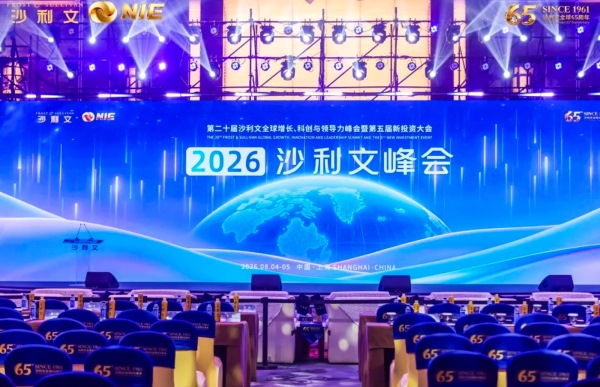
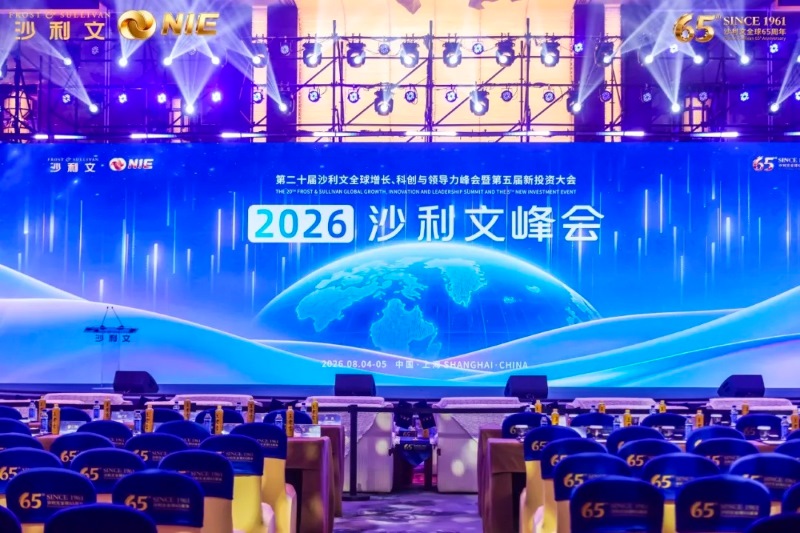
August 4–5, 2026, the 20th Sullivan Global Growth, Innovation & Leadership Summit and the 5th New Investment Conference (referred to as the “2026 Sullivan Summit”) was successfully held at Jing’an Shangri-La Hotel, Shanghai. Marking the 65th anniversary of Sullivan Global and the 20th year of the Sullivan Summit in China, this year’s summit brought together industry leaders, innovative enterprises, investment institutions and sector experts. Participants discussed global sci-tech innovation trends and industrial development directions, fostering in-depth exchanges among industry, capital and innovators, and building a key platform for insights into future industrial trends.
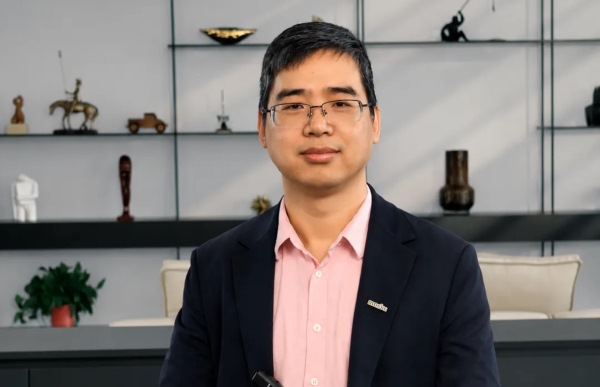
MEMSIC was invited to the summit and took part in the Semiconductor & AI Infrastructure Industry and Investment Forum. On the afternoon of August 4, Lu Jian, Executive Director and CEO of MEMSIC, delivered a keynote speech titled Sensing as the Foundation, Embracing a New AI World. He shared insights on the development trends of sensing technologies, the evolution of the sensor industry and emerging application opportunities in the AI era, and elaborated on the vital value of intelligent sensing in the next round of industrial transformation.
Lu Jian stated that sensors serve as critical components bridging the physical and digital worlds. In major AI-powered smart terminals including intelligent vehicles, consumer electronics and robots, sensors undertake the core task of capturing real-world information. Looking back at technological progress over the past two decades, every upgrade of intelligent products — from smartphones and wearables to new energy vehicles — has relied on continuous advances in sensor technologies.
Driven by rapid progress in artificial intelligence, the sensor industry is entering a new growth phase. According to Lu Jian, AI brings fresh growth momentum to the sensor sector. A growing number of innovative applications leverage AI to enhance product value, while sensor adoption rates keep rising. Moving forward, sensor companies must evolve beyond precision manufacturing expertise to build capabilities in data conversion and information processing. Through technology integration, sensors will transform from simple data acquisition components and gradually participate in judgment and decision-making within intelligent systems.
“The value chain of sensors is expanding beyond basic data collection toward participation in decision-making,” said Lu Jian. Previously, customers mainly focused on sensors’ ability to measure fundamental physical parameters such as temperature, angle and motion. Today, intelligent applications are pushing sensors toward multi-dimensional information fusion. In the future, sensors will combine algorithmic capabilities to further analyze collected data and output high-value event-based information, meeting the demands of smart devices for environmental understanding and autonomous decision-making.
When discussing industrial outlooks, Lu Jian highlighted emerging opportunities in intelligent driving, embodied intelligence, and healthcare. For intelligent driving, as vehicles grow increasingly intelligent, they carry far more sensors than traditional automobiles. Multi-modal sensing and data fusion have become major trends. Adoption of AI will further improve the accuracy and robustness of sensing systems and accelerate the migration of intelligent capabilities to the edge.
In the humanoid robot sector, Lu Jian regards sensing capability as a cornerstone for intelligent robot interaction. As robots transition from laboratories to industrialization, high-precision sensors will play a key role in joint motion control and attitude perception. Taking magnetic encoders as an example, humanoid robots require large quantities of position sensors to support motion control. With the large-scale commercialization of the robotics industry, sensors will become essential for upgrading robot intelligence.
In healthcare, AI is reshaping health management models. Lu Jian explained that many sophisticated health monitoring use cases were once limited by technology. With the integration of sensors and AI, devices can continuously capture user biometric data. Algorithm analytics enable intelligent health management, medical assistance and high-precision positioning, unlocking new possibilities for future medical innovation.
Faced with industry shifts brought by AI, Lu Jian noted that sensor vendors must upgrade from standalone component suppliers to providers of intelligent sensing solutions. Future competition hinges not merely on hardware performance, but also algorithm expertise, system-level understanding and deep integration with customer use cases. MEMSIC maintains a diversified portfolio of MEMS sensors while strengthening algorithm integration. By combining hardware, algorithms and industry know-how, the company delivers more complete sensing solutions for clients.
Following the keynote address, Lu Jian joined the summit panel discussion, New Infrastructure in the AI Era. He exchanged views with panel guests on the development of industrial infrastructure and intelligent sensing under artificial intelligence. During the panel, Lu Jian commented that the core of Physical AI lies in enabling smart devices such as robots to better perceive and understand the real world. As the gateway for sensing, sensors need to advance toward sensing-computing integration. By executing more local data processing and judgment at the edge, sensors can reduce data transmission loads and boost overall system efficiency.
Regarding large-scale deployment of smart sensors, Lu Jian identified strong growth potential across health management, intelligent driving and humanoid robots. Health management applications are expanding rapidly; intelligent driving delivers higher value per unit; humanoid robots hold enormous market potential. Meanwhile, low power consumption, high precision and continuous operational capability will be key directions for future sensor technology development.
MEMSIC’s participation in the 2026 Sullivan Summit demonstrates its long-standing expertise and continuous innovation in MEMS sensing. Facing the industrial transformation driven by AI, MEMSIC will keep innovating in sensing chip technologies and accelerate the rollout of intelligent sensing solutions in automotive electronics, robotics, healthcare and smart terminals. With more precise and intelligent sensing capabilities, MEMSIC empowers the intelligent world of tomorrow.