Exclusive Interview with MEMSIC China CTO | Reimagining Sensing Capabilities: MEMS Sensors Sail Into the Blue Ocean of AI
Release Time:2026.07.29
Driven by the wave of new-quality productive forces, emerging industries including embodied intelligence, low-altitude economy and intelligent driving are rapidly advancing from technical verification toward large-scale commercial deployment. As the "sensing foundation" of intelligent systems, MEMS sensors are entering a golden window of rising demand and pricing. Over more than two decades of development of China’s MEMS industry, the sector has evolved from early-stage import substitution focused on filling gaps to a new phase of global competition centered on value creation. The logic of industry competition has fundamentally shifted. Price and production capacity are no longer decisive competitive edges; instead, technological originality, consistent quality and system adaptability have become core metrics to gauge enterprises’ global competitiveness.
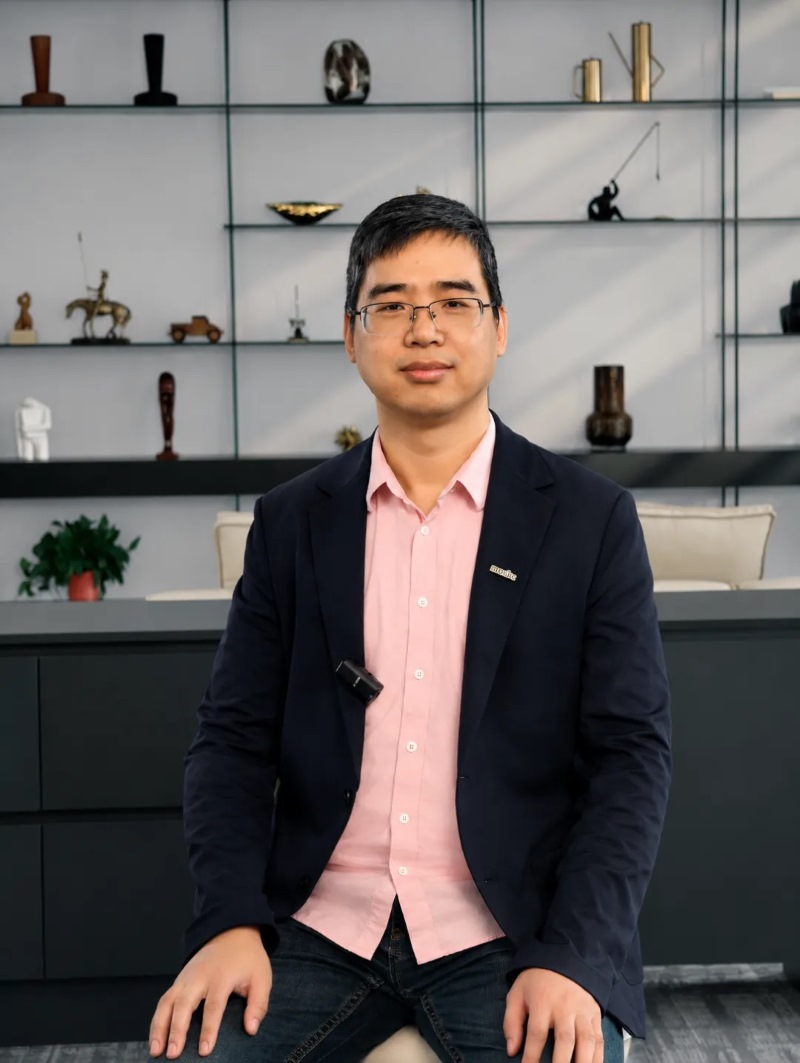
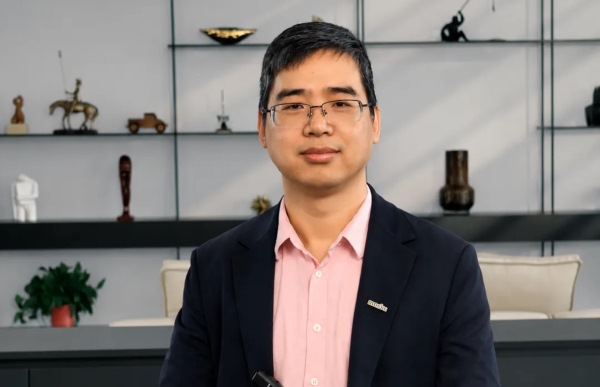
At this critical juncture when China’s domestic MEMS industry upgrades toward high-end and globalization, MEMSIC stands out as a leading representative player. Building on core technologies in MEMS, AMR magnetic sensing and inertial navigation, MEMSIC continues to refine its full-stack sensing portfolio spanning chips, algorithms and system coordination. It also deepens industrial collaboration in emerging areas such as robotics, UAVs and smart terminals, accelerating the integration of sensing technologies with embodied intelligence use cases. Recently, Jiang Lelyue, CTO of MEMSIC China, accepted an exclusive interview with Jiwei Network. He systematically unpacked pivotal topics on the transformation and upgrading of the MEMS sensing industry, covering industry trend analysis, technology barrier development and strategic layout for emerging markets, while offering actionable references for domestic semiconductor enterprises pursuing high-quality growth.
A New Industry Cycle: Emerging Applications and Domestic Leapfrog Growth
Jiwei Network: The rapid rise of low-altitude economy, humanoid robots, AIoT and other emerging tracks has unlocked brand-new incremental markets for MEMS sensors. From your perspective, what opportunities and challenges do these emerging scenarios bring for domestic sensing vendors?
Jiang Lelyue: The proliferation of AI technology is fueling accelerated growth across the entire sensor market. It not only drives demand upgrades in existing markets, but also spawns many unprecedented new applications and scenarios, bringing growth dividends to the whole industry.
More importantly, unlike mature segments long dominated by overseas giants, emerging markets have no absolute leaders yet, putting Chinese and global players on a relatively level playing field. Take the high-profile AI robot market for instance: nearly all companies are starting from scratch, presenting rare development opportunities for domestic chip enterprises. On the other hand, China’s semiconductor industry has moved past the simple phase of "domestic substitution" and entered a new stage of high-quality development. A large number of core clients and supply chain participants in the AI robot sector are based in China. Local suppliers can build distinct competitive advantages through fast demand response and in-depth localized technical support.
At MEMSIC, we have made early technology and product investments. Over the past few years, we have developed a product portfolio tailored for robotics applications, including our newly developed 6-axis inertial sensors (IMUs) and high-precision magnetic encoder chips. Complemented by mature AMR magnetometers and capacitive accelerometers, our offerings comprehensively cover core sensing requirements such as motion control and attitude navigation for robots, closely aligning with the growth rhythm of this emerging market.
Challenges do exist, of course. Emerging scenarios impose stricter requirements on sensor precision, reliability and customized adaptability, testing enterprises’ R&D iteration speed and engineering implementation capabilities. Overall, however, opportunities outweigh challenges, and this is an excellent window for domestic sensor companies to achieve leapfrog development.
Solid Technological Strength: End-to-End In-House R&D and Automotive-Grade DNA
Jiwei Network: Compared with competing products in the industry, what constitutes MEMSIC’s core technological moat?
Jiang Lelyue: Our differentiated advantages are systematic at the technical level. First is our end-to-end in-house R&D capability. We hold independent intellectual property rights covering sensor architecture design, supporting ASIC chips and underlying core algorithms, with abundant proprietary technology IP accumulated over years. Second lies in our packaging, testing and process expertise. We have profound know-how in wafer-level packaging, multi-temperature calibration and burn-in testing, with over 80% of backend testing completed in-house, fully safeguarding product performance and consistency.
The most critical barrier is our quality system. MEMSIC entered the market with automotive-grade applications from its inception. We adopted the IATF16949 automotive quality management system back in 2002. We have extended this rigorous standard, validated over two decades in the automotive market, across all product lines including consumer, industrial and robotics segments. For sensors with seemingly similar specifications, gaps in reliability, consistency and long-term stability represent the most significant invisible competitive barrier.
Jiwei Network: MEMSIC has more than a decade of R&D experience in gyro-assisted magnetometer calibration and heading anti-interference fusion algorithms. What benefits does this "magnetometer + 6-axis IMU" fusion solution deliver in extreme environments such as UAV operations? What role do algorithms play in product competitiveness?
Jiang Lelyue: Low-altitude equipment like UAVs operates in harsh environments. Motor vibration, high-current magnetic interference and localized temperature rises can severely degrade sensor measurement accuracy. With over 20 years of deep expertise in magnetic sensing, we have not only developed high-performance magnetometer hardware, but also mature magnetic interference suppression and auto-calibration algorithms. Together with 6-axis IMUs, this forms a complete hardware-software coordinated solution, effectively offsetting complex environmental disturbances and greatly improving navigation accuracy and flight stability in GNSS-denied environments.
New Increment Battlefield: Humanoid Robot Sensing and AI Integration
Jiwei Network: Humanoid robots are one of the most widely watched tracks in the tech industry. MEMSIC has built a full-stack product portfolio for this sector. Could you elaborate on the core products and solutions MEMSIC offers to meet humanoid robot sensing requirements? What are MEMSIC’s key advantages over domestic and overseas competitors?
Jiang Lelyue: As embodied intelligence moves out of laboratories into real-world scenarios, industry requirements for IMU stability and reliability keep rising. MEMSIC’s long-standing expertise in MEMS inertial sensing continuously strengthens our application capabilities in emerging markets such as robotics and UAVs.
The sensing system of a humanoid robot is a complex ecosystem covering motion control, attitude navigation, tactile interaction and visual perception, which cannot be fulfilled by a single type of sensor. Targeting core demands of humanoid robots, we have developed a full-stack sensing solution spanning four major areas: joint motion control, inertial navigation, tactile sensing and visual stabilization, building precise and reliable "neural endings" for robots.
For joint motion control, our AMR magnetic encoder MDA2000BT features a 21-bit SPI interface with nonlinear error as low as ±0.06°, meeting precision position control demands for high-degree-of-freedom joints and maintaining stable performance under highly dynamic and interference-prone motion environments. For inertial navigation, our 6-axis IMU MIC6200AL delivers gyro zero drift as low as ±3 dps and thermal drift controlled at ±0.05 dps/°C, effectively guaranteeing attitude stability when robots walk dynamically. To address tactile requirements for dexterous hands, we have rolled out a 3D magnetic sensor matrix solution, creating "electronic skin" with ultra-compact, high-sensitivity magnetic sensors. Relevant products have passed automotive-grade certification, boasting strong advantages in high reliability and anti-interference performance. In addition, our image stabilization driver chip, paired with eOIS and EIS algorithm capabilities, mitigates visual jitter during robot movement and provides stable visual input for environmental perception and path planning.
Compared with competitors, our strengths fall into three categories. First, synergistic advantage of full portfolio coverage: multiple sensor types are developed and supplied in-house for stronger fusion and adaptability. Second, automotive-grade quality DNA with market-validated product reliability and consistency. Third, localized supply chain and technical support to rapidly respond to custom requirements and iteration cycles of robotics customers.
Jiwei Network: The integration of AI and the sensor industry is accelerating. How do you view this trend? What constitutes MEMSIC’s core competitiveness in the AI era? How will MEMSIC sustain lasting competitive advantages going forward?
Jiang Lelyue: AI is reshaping the industrial value of sensors. Sensors used to be hardware purely for data collection. In the AI era, sensors need deep integration with algorithms to deliver scenario-aware intelligent sensing. For example, gesture recognition and scene awareness in smart earbuds, as well as motion control and environmental interaction in robots, all rely on multi-sensor collaborative perception. This continuously expands the value boundary of sensors and enlarges market space.
MEMSIC’s core competitiveness in the AI era rests on three pillars. First, global R&D and design capabilities, with end-to-end technical experience covering product definition, sensor design, testing methodology and quality control. Second, mass-production quality control capabilities. Having shipped 4.5 billion chips, we can maintain high quality alongside high-volume manufacturing. Third, the efficient and flexible Fab-Lite business model, which allows us to retain control over core processes while quickly adapting to market shifts and precisely meeting customized, diversified sensing demands of the AI era.
Moving forward, we will continue to scale up global R&D investment and recruit top global talent to advance technologies. Meanwhile, we will deepen our full-range product portfolio, extending toward higher-performance and higher-value products. We will build a global R&D, manufacturing, sales and service ecosystem, strengthen ecological partnerships, and maintain leadership amid the AI-driven sensing revolution.
From a pioneer in automotive-grade quality control to a leader in high-end sensing across diverse fields, MEMSIC has blazed a differentiated high-end development path through 27 years of technical dedication and quality commitment. In this new cycle of global competition within the MEMS industry, leading domestic players represented by MEMSIC are accelerating the transition from "following" to "running neck-and-neck" and then "leading", leveraging full-stack technology capabilities, robust quality control systems and local ecosystem strengths. They are injecting solid sensing power into the high-quality development of China’s semiconductor industry.