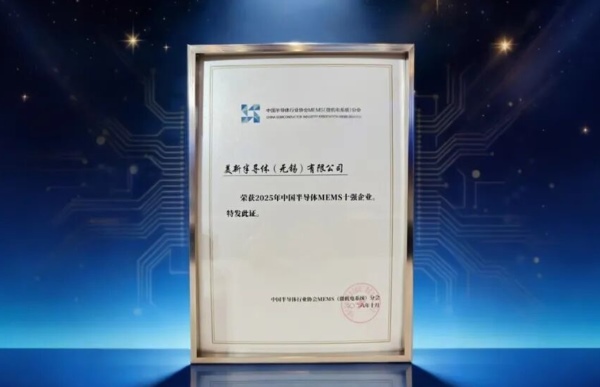
AI Reshapes the MEMS Industry! MEMSIC Attends the 7th China MEMS Manufacturing Conference and Unveils Its Roadmap for "Perception Leap"
Release Time:2026.10.23
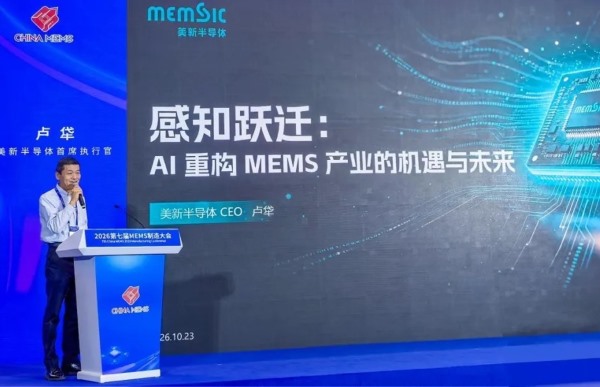
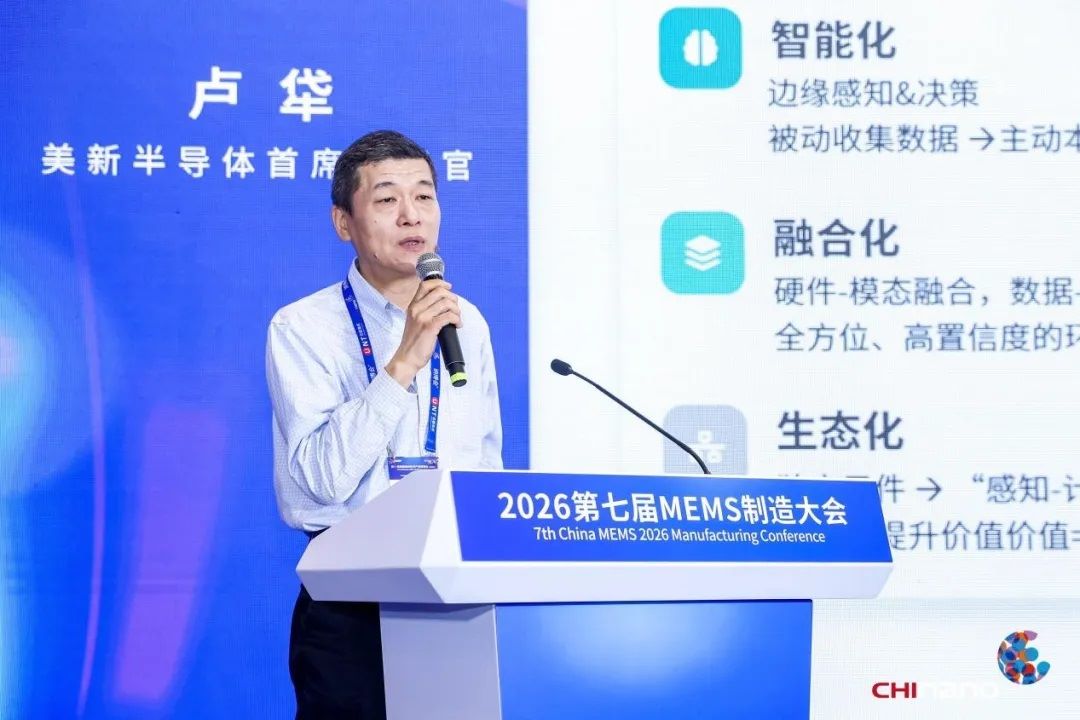
On October 23, the MEMS Intelligent Sensing and Devices Forum of the 7th China MEMS Manufacturing Conference was held at Suzhou International Expo Center. MEMSIC made a prominent appearance at the event. Lu Jian, Chief Executive Officer of MEMSIC, delivered a keynote speech titled Perception Leap: Opportunities and Future of the AI-Restructured MEMS Industry. He shared MEMSIC’s latest insights and practices around industrial growth dynamics, transformations in core application scenarios, and product development pathways.
Shift in Growth Engines: AI Sensing Emerges as a New Primary Track
AI is reshaping the growth logic of the MEMS industry. Statistics project that the global AI sensing market will expand from USD 4.626 billion to USD 16.370 billion by 2032, representing a 253.9% increase and a CAGR of 20.2%. By contrast, the global traditional MEMS motion sensor market is forecast to grow from USD 4.85 billion to USD 6.502 billion over the same period, with a CAGR of only 6.1%. This stark gap signals a shift in industry growth drivers: as AI rapidly penetrates end devices, intelligent sensing has become the new primary growth engine for the MEMS sector.
Beneath this market shift lies an evolution of sensing technology — from simple measurement toward intelligent understanding. A single sensor captures specific physical parameters; multi-modal fusion integrates data from diverse sources to deliver comprehensive perception outcomes. When AI algorithms are deployed locally on chips or modules, devices can analyze data on-site and make real-time decisions powered by edge computing, reducing reliance on the cloud.
The next inflection point for the sensor industry is no longer merely measuring distance, motion steps or angles. It enables devices to interpret events and scenarios. This means sensing capabilities are advancing from single-sensor “activity recognition” to multi-sensor collaborative “event and scene recognition”. By embedding edge AI capabilities into sensors, the entire system evolves from raw sensing to contextual cognition.
This transformation redefines competitiveness for sensor vendors. As application requirements grow more sophisticated, sensors are moving away from one-size-fits-all general-purpose designs toward scenario-specific customization and deep optimization.
Scenario Transformation: Robotics, Autonomous Driving and Healthcare Advance in Parallel
As sensing evolves from data acquisition to scene comprehension, robotics, autonomous driving and healthcare have become key expansion frontiers for MEMS technology. Humanoid robots, in particular, bring substantial market growth potential due to their high sensor density requirements.
A humanoid robot integrates joint servo control and degree-of-freedom angle detection. A single unit may deploy around 100 magnetic encoders, alongside IMUs and 3 to 9 imaging modules. According to Sullivan forecasts, the global humanoid robot market will reach RMB 1520.2 billion by 2030.
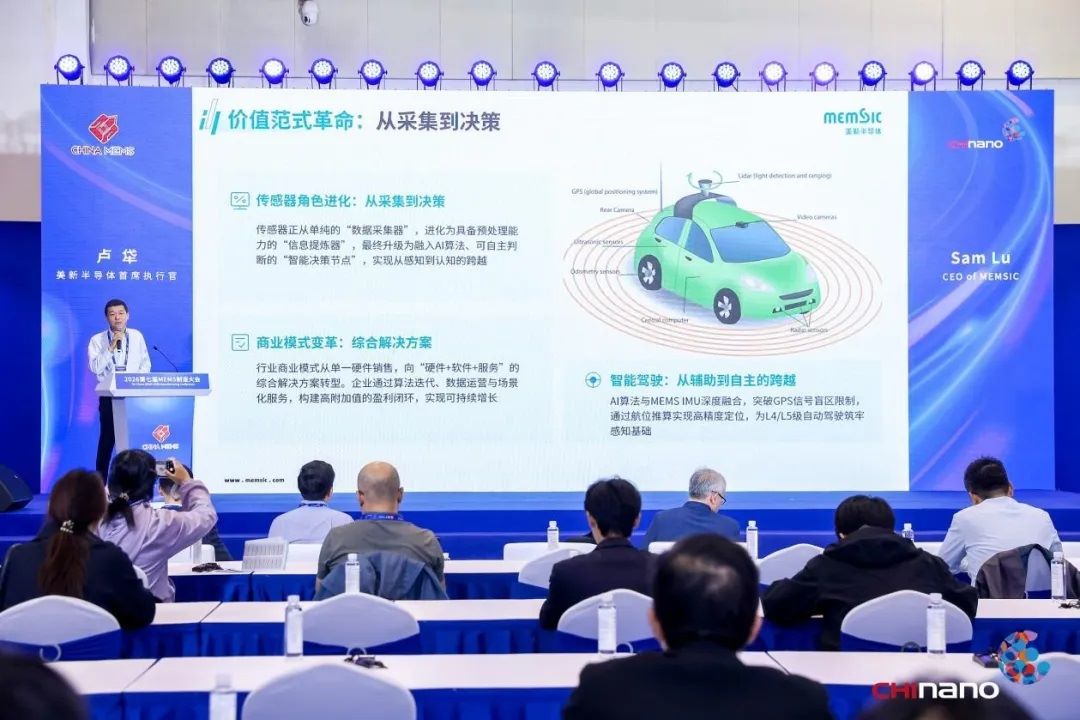
Autonomous driving also imposes higher standards on perception systems. Faced with complex road conditions, sensors must deliver millisecond-level response and superior reliability. AI-enhanced MEMS IMUs can maintain high-precision positioning via dead reckoning in GPS-denied environments such as tunnels and underground parking garages.
Meanwhile, the value of sensing technology is extending into healthcare. China’s professional medical MEMS market boasts a CAGR of 25%, with demand shifting from conventional post-treatment intervention toward proactive health management. In addition, consumer devices including smart bands, smart rings and blood pressure monitors are bringing professional-grade medical sensing into daily life.
From spatial perception and tactile sensing for robots, to positioning accuracy and reliability for autonomous driving, and precise tracking plus continuous monitoring for healthcare, these diverse scenarios are collectively driving MEMS sensors toward higher integration, greater intelligence and deeper application adaptation.
Technological Breakthroughs: Translating Industrial Opportunities into Product Deliverables
The AI-driven wave of innovation creates new windows of opportunity for domestic MEMS players. Nevertheless, multiple hurdles remain on the path to industrial breakthrough. The MEMS domain carries deep technical accumulation and formidable patent barriers; many innovative concepts must navigate existing patent landscapes. Industrial chain collaboration also needs further improvement. Many domestic fabs face underutilized production capacity, and unlocking specialized labor division and resource integration is critical to lifting overall industrial competitiveness. Brand recognition, customer qualification and supply chain resilience will also shape the pace at which domestic products enter global markets.
“Success in the MEMS industry cannot be achieved simply by capital investment. It demands craftsmanship and long-term iteration.” This statement captures the essence of MEMS technical accumulation and underpins MEMSIC’s strategic roadmap.
Looking ahead, MEMSIC is accelerating the commercialization of its R&D achievements and advancing three key product lines: six-axis gyroscopes, magnetic encoders and eOIS image stabilization chips. The six-axis gyroscope, under five years of dedicated development, is entering ramp-up phase and is poised to become a major force for domestic substitution. Magnetic encoders, which are further along the development curve, are already in mass production with confirmed orders and are expected to scale up significantly next year. The eOIS image stabilization products have passed a series of validation tests and achieved professional-grade performance.
Though at different development stages, the three lines converge toward core technology breakthrough and large-scale deployment. “Without scale, there is no pricing power.” For domestic MEMS enterprises, AI-enabled innovation is only the starting point. Sustained product competitiveness and mass adoption are essential to strengthen global market influence.
From raw data acquisition to intelligent decision-making, and from generic components to scenario-tailored solutions, AI is rewriting the technical directions and competitive rules of the MEMS industry. Aligned with this trend, MEMSIC will continue to invest in fundamental technology and deepen scenario engagement. Guided by the vision of “understanding customers better than they understand themselves”, MEMSIC will drive deep integration between sensing technology and intelligent applications, accelerate AI adoption for smart end devices, and continuously fuel the perception leap of China’s MEMS industry.