




Exclusive Interview with Global CTO | Targeting High-End Innovation Tracks, MEMSIC Leads the New Global Journey of the MEMS Sensing Industry
Release Time:2026.07.10
Driven by the rapid growth of emerging industries including embodied intelligence, humanoid robots, low-altitude economy and AIoT, MEMS sensors, the "sensing cornerstone" of intelligent hardware, are presented with dual opportunities for industrial upgrading and market expansion. While domestic substitution of MEMS in China has entered an in-depth high-quality phase, shifting its development logic from simple import replenishment toward global benchmarking in technology, quality and market, the industry still faces challenges such as low-end homogeneous cutthroat competition, high barriers for advanced technologies, and shortages of high-end production capacity as well as R&D talent.

With over two decades of industry expertise, MEMSIC has built core moat through the Fab-Lite lightweight model, full-stack self-developed core technologies and stringent automotive-grade quality control. Leveraging its collaborative R&D system across China, the US and Europe together with local mass-production advantages in China, the company seizes incremental opportunities in emerging tracks and tackles industry pain points. Today, MEMSIC firmly ranks among China’s first-tier MEMS enterprises. Having shipped more than 4 billion chips cumulatively, it holds leading global market share for multiple product lines, standing as a benchmark domestic MEMS player for high-end advancement and globalization.
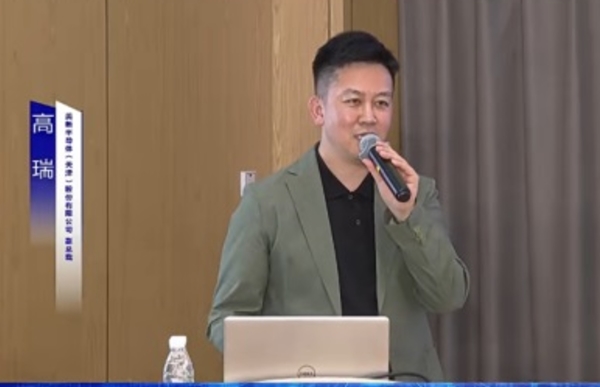
Against transformative industry trends, technological innovation, domestic substitution opportunities and global footprint expansion have become core industry imperatives. Stephen, Global CTO of MEMSIC, sat down for an exclusive interview with Jiwei Network. He analyzed industry trends, opportunities and challenges, dissected the strategies of domestic MEMS manufacturers for high-end innovation, technological breakthroughs and full-market deployment, and shared the company’s vision to spearhead the new global journey of the MEMS sensing industry.
Decoding Industrial Evolution, Upholding High-End & High-Quality Strategy
Jiwei Network: Domestic substitution for MEMS sensors in China is accelerating amid intensifying market competition. How do you assess the development trends of the global and domestic MEMS sensing industry from 2026 to 2027? To which dimensions is the core competitive barrier of the industry evolving from price and production capacity?
Stephen: Fueled by the rapid expansion of the MEMS industry and accelerated domestic substitution, industry competition is gradually shifting toward an integrated contest of technological R&D, product quality and system solutions. This requires striking a better balance among product performance, cost and quality. Over the next two years, China’s MEMS industrial chain will enter a critical window for quality upgrading, technological advancement and value leap, and the global competitiveness of domestic manufacturers will keep growing.
At present, the technology, performance and quality control of domestic players have met the standards for large-scale commercialization in inertial sensing. Mid-to-high-end orders keep flowing to leading high-quality local enterprises. This enables local suppliers to expand production capacity and achieve better cost structures and higher quality standards. Meanwhile, benefiting from scale effects generated by massive domestic demand, enterprises will continuously cut costs and improve quality, and ramp up R&D of high-value, high-performance products, gradually evolving into globally competitive suppliers.
Jiwei Network: Against the backdrop of new-quality productive forces, booming emerging sectors such as the low-altitude economy, embodied intelligence and humanoid robots have unlocked entirely new incremental markets for MEMS sensors. What is your view on the opportunities and challenges brought by these emerging scenarios for domestic sensing enterprises?
Stephen: Clearly, opportunities coexist with challenges throughout this industrial expansion. The biggest opportunity for domestic MEMS players in the coming years lies in AI, which is fueling rapid growth across the entire sensor market. It brings growth in existing markets as well as unprecedented new applications and opportunities, exemplified by fast-emerging tracks including the low-altitude economy, humanoid robots and smart wearables.
Unlike mature markets dominated by overseas players, these emerging segments have no established giants yet. Enterprises at home and abroad start from the same baseline, creating a historic chance for domestic manufacturers to achieve curve overtaking and break the follow-on development pattern. Now is an exceptional time for sensor companies, with substantial opportunities for development, competition and breakthroughs in both existing and emerging markets.
Jiwei Network: As domestic MEMS evolves from "import substitution" to "global benchmarking", from the perspective of an industry leader, what bottlenecks urgently need to be addressed for the overall development of China’s MEMS industry in the next five years?
Stephen: Several core bottlenecks still restrict breakthroughs for the industry in China, including insufficient high-end mass manufacturing capacity, imperfect precision testing support systems, and shortages of high-level engineering R&D resources and talent. As markets expand and enterprises ramp up production, gaps in high-end capacity and testing infrastructure keep widening. Moreover, high-precision and customized demands from emerging scenarios impose higher requirements on enterprises’ R&D iteration and engineering adaptation capabilities. Closing these two major gaps is critical for industrial advancement.
Jiwei Network: Severe homogeneous competition and low-end price wars prevail in China’s MEMS sector. MEMSIC sticks to a high-end roadmap. What is your core strategy to avoid low-price competition? How does technology and quality control enable product premium?
Stephen: In response to low-end homogenization and price competition in the industry, MEMSIC adheres to a high-end, high-value and differentiated development path. The core to escaping low-price competition and achieving product premium lies in long-cultivated stringent quality control and continuous original innovation. In addition, MEMSIC established its automotive-grade quality system back in the 1990s, extending rigorous automotive quality standards across the full product portfolio covering consumer, industrial, robotics and low-altitude equipment segments, and building high-quality barriers across all product lines.
For sensors with seemingly identical parameters, reliability stands as the most critical invisible barrier. For mass-use scenarios such as smartphones and automobiles, sensing reliability is paramount. Tiny quality defects may lead to failure of end devices, and customers prioritize quality over price. MEMSIC has long upheld ultra-high quality standards at single-digit PPM level. With over 4 billion chips shipped and zero large-scale mass failures, we deliver dual premium in quality and technology through rigorous quality management.
Deep-Dive into Self-Developed Technological Innovation, Building Differentiated Strength with Hard Core Capabilities
Jiwei Network: MEMSIC has years of deep expertise in AMR magnetic sensing and MEMS inertial sensing. The company has independently developed core products including 6-axis IMUs, 3D magnetometers, magnetic encoders and image stabilization chips, and achieved a closed-loop IDM full chain. Compared with peer products in the industry, what constitutes the differentiated barrier of the company’s core technologies? How will you consolidate industrial competitiveness in the future?
Stephen: The differentiated Fab-Lite business model is key to rapid iteration and commercialization of MEMSIC’s technologies. We abandon the drawbacks of heavy capital and low flexibility in traditional IDM. We leverage mature external manufacturing processes, and only operate in-house production lines for proprietary AMR core specialty processes. Resources are concentrated on chip design, algorithm iteration and scenario adaptation. This model enables rapid responses to market iterations and customized requirements, helping us build a full portfolio of high-end products spanning consumer, automotive, industrial, robotics and low-altitude economy applications.
Our successful development of magnetometers, various inertial sensors and products targeting consumer and automotive markets fully demonstrates this advantage. For emerging markets ahead, we will roll out high-value offerings such as E-OIS, vision stabilization systems and high-performance encoders to sustain and expand our advantages.
Jiwei Network: As commercialization of the humanoid robot industry deepens and competition intensifies, MEMSIC has developed full-stack sensing solutions for joint control, inertial navigation, tactile sensing and vision stabilization, alongside products including AMR magnetic encoders, 3D geomagnetic electronic skins and image stabilization driver ICs. What key advantages do these products hold against domestic and overseas competitors?
Stephen: Compared with industry peers, MEMSIC’s strengths lie in hardware performance, high stability, scenario adaptability and in-depth algorithm enablement. For application scenarios, to meet demands for robot joints, motor and rotating shaft control, MEMSIC offers AMR magnetic encoder and Hall position sensor solutions, delivering stable motion feedback for robots through high-precision position detection capabilities. Meanwhile, MEMSIC’s core differentiator lies in superior quality control and reliability. Drawing on profound industry accumulation, advanced sensing technology and AMR processes, we develop high-precision sensors. In particular, inertial sensors excel in compact packaging and flexible power regulation, and our new multi-axis products deliver outstanding value.
Jiwei Network: MEMSIC has accumulated a decade of technological expertise in gyro-assisted geomagnetic calibration and heading anti-interference fusion algorithms. How do these algorithms empower end products such as UAVs and smart wearables to build core competitiveness and technological moat? For future cutting-edge technology R&D and new product iteration, what key directions will be prioritized to match development demands of sectors including the low-altitude economy?
Stephen: At the algorithm level, targeting extreme operating conditions of UAVs and low-altitude equipment including vibration, magnetic interference and high temperature, MEMSIC adopts the hardware solution of "magnetometer + 6-axis IMU". Beyond self-developed high-performance mechanical sensors, we have also built proprietary magnetic interference suppression and calibration algorithms, greatly improving navigation accuracy and flight stability in GNSS-denied environments. Furthermore, high-end sensing competition has long moved beyond comparison of standalone hardware parameters. Integration of sensors, software algorithms and industry application experience becomes the decisive factor. MEMSIC can customize and optimize algorithms for various segmented end-use scenarios to realize deep hardware-software coupling and application adaptation.
On the other hand, backed by self-innovation and experience accumulation, MEMSIC keeps upgrading product technologies. The previously completed CNY 200 million strategic financing is mainly allocated to advanced packaging & testing upgrades and technology R&D. It allows us to conduct packaging and testing more efficiently, deliver high-performance packaging and more comprehensive, advanced testing solutions. This helps expand our capabilities in high-value product areas such as humanoid robots and the low-altitude economy, continuously lifting our competitiveness in these sectors.
Seizing Opportunities in the AI Era, Balancing Local Rooting and Global Deployment
Jiwei Network: MEMSIC has established R&D and manufacturing systems across China, the US and Europe, with a global sales network. During global layout, how does MEMSIC balance local development and international expansion to meet differentiated requirements of customers in various regions?
Stephen: We have branches in China, Europe and the United States. This enables us to recruit the most talented and experienced engineers in the sensor market to develop highly competitive products. From a design perspective, MEMSIC boasts a world-class design team capable of competing against top global sensor manufacturers. Meanwhile, we leverage China’s low-cost supply chain system, securing high-standard product design alongside low-cost manufacturing capabilities. This combination delivers strong advantages and will serve as one of our key strategies to continuously expand market share.
In addition, drawing on mass-production capacity at smart factories in Wuxi and Shaoxing, paired with China’s complete and efficient supply chain, MEMSIC builds its core advantage of "Global R&D + Local Mass Production". By integrating top global talent and cutting-edge technologies, we capture technology trends and differentiated demands across regions, achieving full-market breakthroughs through globally collaborative R&D and local scenario adaptation.
Jiwei Network: What is your view on the integration trend between AI and the sensor industry? What critical role will MEMS sensor technology play? What major industrial opportunities emerge from this?
Stephen: Today, the integration of AI and the sensor industry is accelerating the transformation of the industry ecosystem. MEMS technology is reshaping the new AI era. For instance, AI has greatly enhanced the capabilities of smart earbuds to support advanced functions such as real-time translation, with application scope expanding rapidly and the relevant market growing at high speed. This is because devices equipped with microphones, motion and other sensors can identify body movements, gestures and environmental information to enable more precise human-machine interaction.
The starting point of these opportunities lies in practical implementation. We first deepen our presence in core sensor markets to boost shipment volume and lift market share. Then, leveraging revenue generated, we extend to high-performance, high-value products. In this way, we can balance the cost advantage of mass production and high profit from high-end products, building a diversified and extensive product matrix.
Jiwei Network: In the AI era, what do you see as MEMSIC’s core competitiveness? How will you sustain competitive advantages in the global market? And how will you further strengthen international and global deployment in the future?
Stephen: In the AI era, MEMSIC’s core strengths fall into three categories. First, the advantages of global R&D talent and design capabilities, plus comprehensive know-how spanning product definition, sensor design, testing and quality control methodologies. Second, experience in large-scale manufacturing. MEMSIC has shipped over 4 billion units, with profound expertise in delivering high-quality, high-volume products. Third, an efficient business model. We possess mature in-house development workflows and can manage via external processes, enabling focused and efficient operations to precisely meet high-precision and customized sensing demands in the AI era.
As numerous emerging markets spawn brand-new applications and products powered by AI, our innovation achievements keep rolling out globally. Meanwhile, deploying design centers at home and abroad allows us to stay close to cutting-edge technological needs and industry updates across regions, accurately capture genuine demands when evaluating market opportunities, and synchronize R&D results worldwide.
Looking ahead, we will continue increasing investment in international R&D. Top senior talent is distributed globally; only by embracing the world can we attract premium talent and continuously improve overall R&D strength and expertise. At the same time, MEMSIC will further advance its globalization strategy, connect the full global chain of R&D, manufacturing, sales and service, strengthen cross-border technology collaboration and ecosystem partnership, iteratively upgrade high-end sensing technologies, implement scenario applications, and refine product portfolios and algorithm capabilities, facilitating high-quality development of the intelligent sensing industry.